Self-Compassion Isn't Soft. It's the Science of Actually Getting Things Done.
- BD3 Solutions

- 2 days ago
- 6 min read
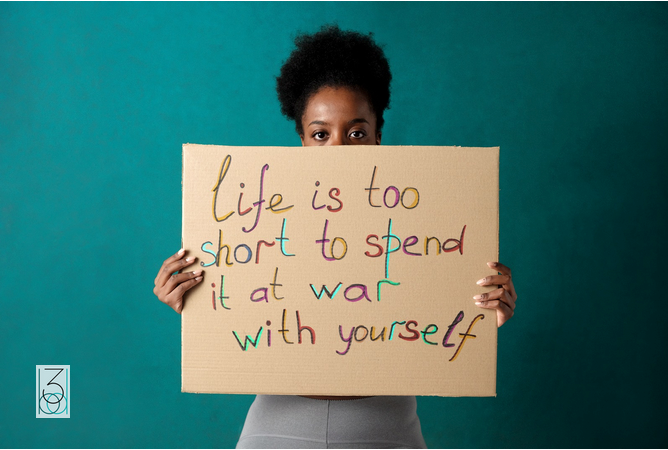
The belief that being kind to yourself leads to complacency is one of the most persistent myths in human motivation. Here's what the research says instead.
By Andrea Spyros & Nancy DeFina | BD3 Solutions
If you've spent time in professional or high-achievement settings, you have probably picked up a belief that goes something like this: the way to achieve results is by holding yourself to a high standard, staying self-critical, and never letting yourself off the hook.
It's a convincing story. It sounds disciplined. It sounds serious.
There is also a significant body of research that challenges it.
In our previous article, we introduced the idea that self-criticism doesn't cure procrastination. It actually makes it worse.
We looked at the Procrastination Cycle: the emotional loop where anxiety and avoidance reinforce each other, and where the inner voice saying "you should be doing this" adds extra weight to an already heavy situation. We pointed to the landmark Wohl, Pychyl, and Bennett study showing that self-forgiveness, not self-judgment, was what actually reduced future procrastination.
This week, we want to go further.
Because for most high-achieving people, the idea of self-compassion brings up a very understandable concern: "If I go easy on myself, won't I stop trying?"
Let's address that directly.
The Myth of Necessary Suffering
Dr. Kristin Neff, Associate Professor of Educational Psychology at the University of Texas at Austin, has spent decades studying self-compassion and what happens when people practice it. She's encountered the "complacency concern" more times than she can count, and her research addresses it head-on.
What she finds, again and again, is this: self-compassionate people are not less motivated. They are more motivated.
They report greater personal initiative to make changes in their lives.
They set more meaningful goals and make more consistent progress toward them.
They are more resilient when facing failure and setbacks.
And, importantly for this discussion, they procrastinate significantly less than their self-critical counterparts.
The reason isn't complicated, though it may seem counterintuitive: self-compassion creates a psychological environment where taking action feels safe. Self-criticism, on the other hand, creates an environment where action feels risky because every attempt becomes a chance to confirm your worst fears about yourself. In that setting, avoidance is a completely rational response. Why try when trying might prove you're not good enough?
That's not laziness; it's self-protection.
By creating safety, self-compassion is the way out and avoidance stops being necessary in the first place.
The Real Difference: Fear vs. Care
Neff makes a distinction worth considering: self-criticism and self-compassion are both motivators.
The difference is what drives them.
Self-criticism motivates through fear. Fear of failure. Fear of judgment. Fear of not being enough. This kind of motivation is urgent and loud, but it's also unstable. It creates anxiety, which leads to avoidance, which leads to more self-criticism, which creates more anxiety. It's the engine of the Procrastination Cycle itself.
Self-compassion motivates through care. Care about your goals, your growth, the contribution you want to make, the person you're becoming. This kind of motivation is also steadier, more consistent, and far less likely to lead into the avoidance spiral. It doesn't set off the emotional alarm bells that send you searching for relief in a Distractivity™.
The research supports this. Self-compassionate people experience less performance anxiety and less fear of failure. In short, they feel safer, and as a result, they take more consistent action over time.
They feel safe, and that allows them to actually keep going.
What Self-Compassion Actually Looks Like
Part of why self-compassion is misunderstood is that it sounds like a feeling when it's actually a practice with three very specific, very learnable components, according to Kristin Neff:
1. Mindfulness
In the context of self-compassion, mindfulness means being able to observe your thoughts and emotions without being consumed by them or pushing them away. It creates a small but important space between stimulus and response, between the thought "I should be doing this" and the automatic reach for your phone.
It's not about suppressing the feeling. It's about noticing it clearly enough that you don't identify as it or have to be driven by it.
"I'm feeling overwhelmed by this task right now" is a very different internal experience from "I am an overwhelmed person who can't handle this."
One is about the task, and one is about who you are. Mindfulness helps you stay in observation, rather than becoming the judgment.
2. Common Humanity
One of the cruelest tricks of the Procrastination Cycle is the sense of isolation it creates.
When you're stuck, it's easy to feel like everyone around you is moving forward while you're the only one struggling. That isolation makes the shame worse. The shame makes the avoidance worse. And so it spirals.
Common humanity is the remedy. It's the recognition that struggle, imperfection, and falling short of your own expectations are part of the universal human experience. Every smart, capable professional you admire has been exactly where you are. Chronic procrastination affects an estimated 20% of the adult population. And procrastination affects nearly all of us in certain situations.
You are not uniquely broken. You are having a normal human experience.
That recognition alone can loosen the grip of shame enough to make movement possible.
Like this? We'll send one of these to your inbox each week.
3. Self-Kindness
Self-kindness means responding to your own struggle with warmth and understanding rather than judgment and contempt.
It asks a simple question: how would you speak to a good friend who was going through what you're going through?
Most of us would never say to a friend, "You're so lazy. You've had weeks to do this. What is wrong with you?"
And yet we say versions of that to ourselves regularly, often without even noticing.
Self-kindness doesn't ask you to pretend everything is fine. It asks you to stop being cruel to yourself in moments when you're already struggling.
For the smart, capable professional who is putting off an important project, self-kindness sounds like: "This is a moment of struggle. This is genuinely hard.” That's not a character flaw. Instead ask: “How could I feel safer taking action right now?”
Good Feelings Aren't the Reward; They Are the Fuel
Dr. BJ Fogg, founder of the Stanford Behavior Design Lab and the behavioral scientist whose work is at the heart of what we do at BD3 Solutions, has spent decades studying how habits actually form.
What he found is that the most powerful driver of lasting behavior change is not willpower, discipline, or pressure. It is positive emotion.
In the Tiny Habits® Method, “Celebration” is the practice of generating a genuine feeling of success immediately after a tiny behavior and the neurological mechanism by which new habits get encoded.
Your brain wires in the behaviors that are followed by strong emotion. Since procrastination already has plenty of negative emotion attached to it, the most powerful thing you can do is intentionally design positive emotion into the behaviors you want to keep.
Put simply: as BJ Fogg says, “you change best by feeling good, not by feeling bad.”
Neff's research, coming from an entirely different perspective, arrives at the same point. Positive emotion created by mindfulness, common humanity, and self-kindness is not a reward you earn after getting things right. It's the environment in which getting things right becomes more possible.
Fear-based motivation tells you to earn your good feelings.
Care-based motivation and behavior science say the good feelings come first, and the results follow.
A Question That Changes Everything
There's a question within Neff's framework that we find endlessly useful in the context of procrastination.
It's simple, but it changes everything:“What would I say to a good friend who was struggling with this?”
Most of us, if we answer honestly, would not say, "You're lazy and undisciplined." We would say something like: "This sounds really hard. What's getting in the way? Is there a smaller step you could take?"
That is not a lesser standard.
That is a more effective one because it doesn't add emotional weight to an already difficult situation. It creates the conditions under which your friend (or you) might actually be able to move forward.
Try it this week. Pick one task you've been avoiding. Ask yourself what you'd say to a friend in the same situation. Then say it to yourself.
And then consider the next tiniest action you can do to move forward..
What's Coming Next
You now have a framework for understanding why self-compassion works. But here's what we want to share with you: if you've already been working with the Untangle Procrastination™ approach (the Three Hidden Knots and the Three “A”s), then you've already been practicing self-compassion. You may not have called it that. But the tools you've been building? They are self-compassion in everyday, practical, science-backed form.
Next week: We'll show you exactly where these two frameworks meet and why that matters for the next step in your Untangling journey.
Andrea Spyros and Nancy DeFina are the founders of BD3 Solutions and creators of Untangle Procrastination™, a science-based program built on methods from the Stanford Behavior Design Lab.
© 2026 BD3 Solutions | bd3solutions.com/untangleprocrastination Tiny Habits® is a registered trademark of BJ Fogg, PhD